Why We Partner with CEA CAPA to Mentor the Next Generation of Creatives

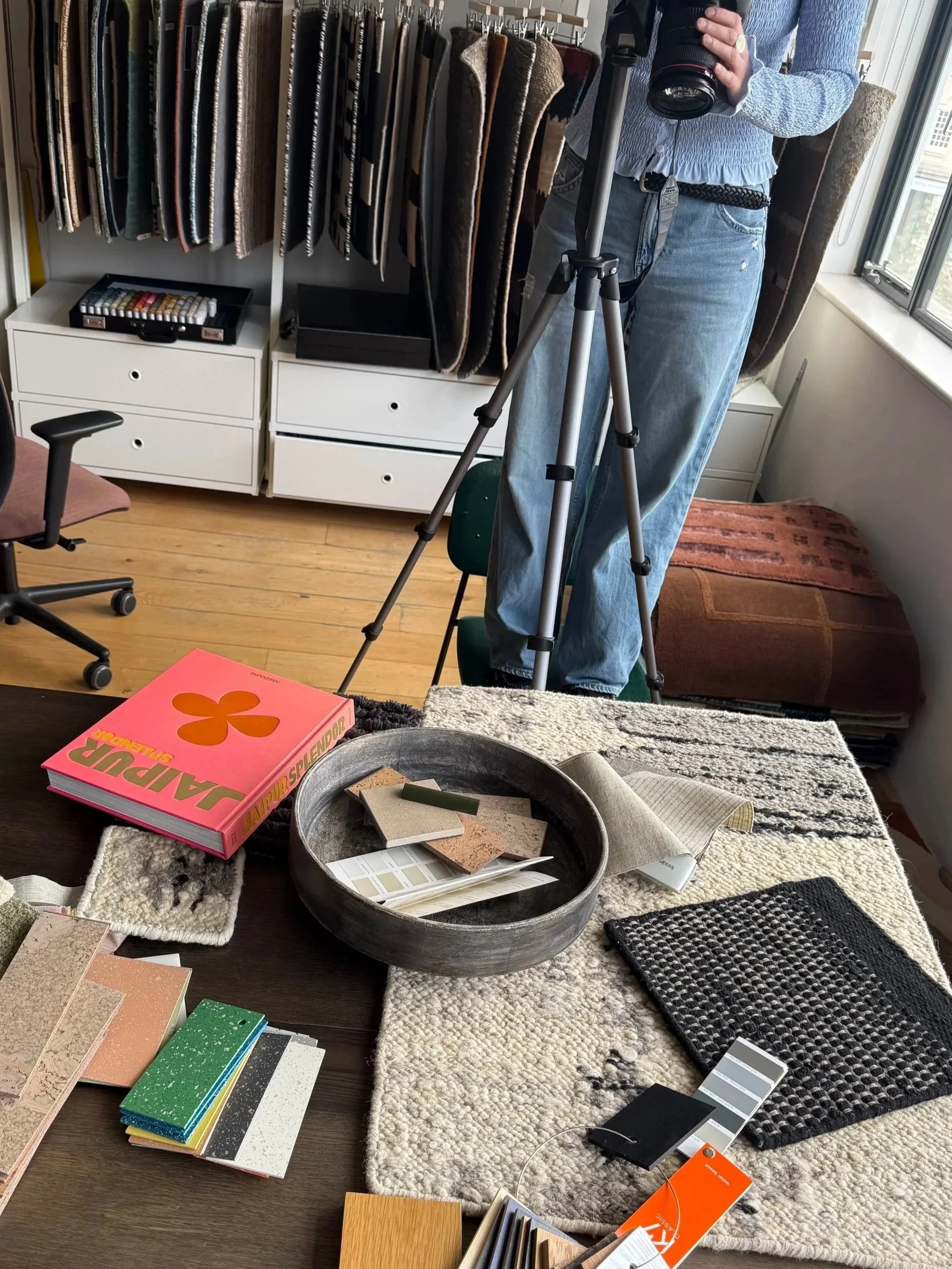
If you follow us on social media, you see the polished final products and the effortless custom rugs in a hospitality lobby. But anyone who works in design knows that a nice Instagram page is only about ten percent of the real story.
Social v. Real

The real magic of what makes our company is in the ninety percent you don’t see on social media. At TOTZKE, everything from the initial rug design to the final installation relies on deep, trust-based client relationships; a process you can only fully see from behind the scenes. The opportunity to show students that reality is exactly why we partner with CEA- CAPA to bring in university interns. And for Lauren Totzke, this partnership is personal.

When Lauren herself was a student from the United States, she navigated the same excitement and nerves that our interns experience today. She came to London through CEA CAPA, completing an internship that reshaped her career path, which led to what TOTZKE is today.

"My own CEA CAPA internship was the catalyst for everything I have built here," Lauren says. " I would never have been presented the opportunity to move to London with J+J without the internship. It showed my employer that I was up for the challenge of moving to London. I thought I was coming for 2 years and have stayed for over 15. I hope to show our interns that business relies on human connection. I want them on installation job sites, in the room for client briefs, and learning how to communicate with people face-to-face. It’s the little things that add up and build trust and business. That is how you build a reputation and a career."
Our Interns

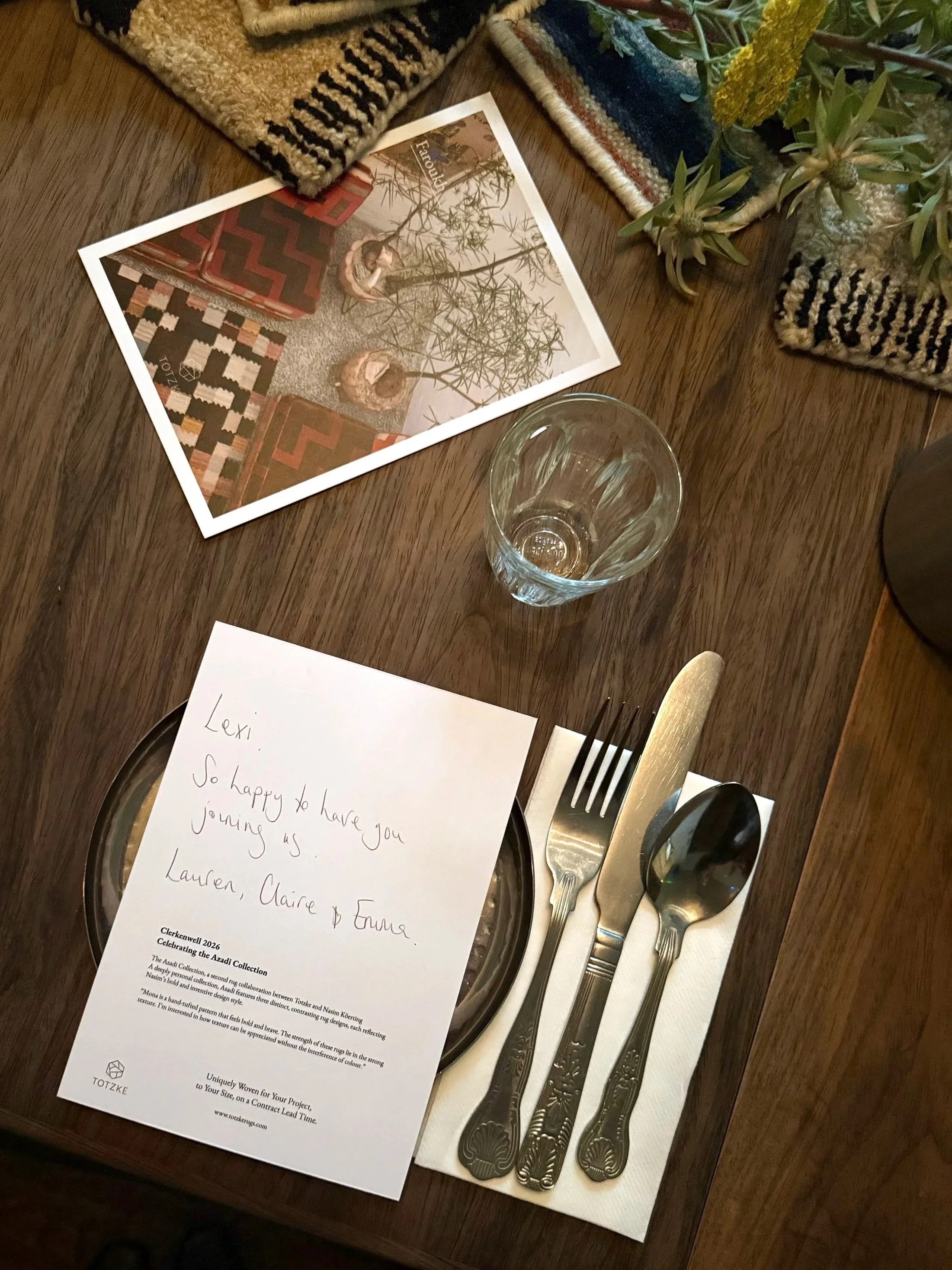
Previously, TOTZKE has hosted four interns, and this summer, that full circle philosophy is being put into practice by our fifth creative intern, Alexis Kretsch, a junior studying Advertising Creative at Michigan State University.

Instead of just managing our digital presence from a desk, Alexis has been able to experience the London design world; joining us on-site, learning the logistics of rug production, and seeing firsthand how we nurture client relationships from the first sketch to the final reveal.

We asked Alexis to share a bit about her experience in the London design world through TOTZKE:

“Back home at MSU, you learn the technicalities of branding and design, but there is no textbook for the pace or norms of the London creative industry," says Alexis. "Working with Lauren and the Totzke team has completely reframed how I view the business. Knowing that Lauren started out as a CEA CAPA student herself makes her mentorship even more impactful. Getting to go to real client installations and seeing the trust that goes into every project has been eye-opening. It has taught me that the most meaningful creative work is not just what looks good on a social media feed, but the real-world execution and relationships behind it."

For us at TOTZKE, hosting interns keeps our perspective fresh, connects us with incredible global talent, and allows us to pay forward the life-changing mentorship that started it all.

We are incredibly proud to partner with CEA CAPA, and we cannot wait to see how Alexis takes her London studio experience back to Michigan and into her senior year. Ultimately, hosting interns from CEA CAPA isn't just about providing a workspace; it is our way of ensuring that the real-world skills, client relationships, and raw craftsmanship of our industry continue to be passed forward.


CEA-Capa London Internship Details

Raw Materials in our Rugs

Responsible Wool

Wool is the dominant fibre in our rugs.  Responsible sourcing is critical and aims to improve the welfare of sheep and the land they graze on.

Where to use

Our hand tufted wool rugs are manufactured with high-density construction for commercial areas. They can be used in medium-traffic commercial areas. Our Flatwoven wool rugs are ideal for underneath moving furniture and in an area with a lot of footfall. Avoid using high-pile carpets in areas with high traffic

Natural Jute

Natural Jute is a renewable resource that can be grown without the need for fertilizers and pesticides, making it a more sustainable alternative to synthetic fabrics. Jute fabric also has a low carbon footprint, as its production requires less energy and resources than synthetic fibers.   Jute is biodegradable and annually renewable.  Grown in the northeast of India near the weaving houses, it is also al locally sourced raw material.  

Where to Use

While jute is sustainable and budget-friendly, it cannot be easily cleaned like wool. It is not as durable a fiber as wool. Jute rugs can be used in lounges and sitting areas but should not be used in high-traffic areas.

 Recycled Cotton

Recycled contton includes recycled raw material, as well as used, reconditioned, and re-manufactured components.  Textile recycling is generated from both pre-consumer and post-consumer materials, with the largest volume coming from pre-consumer waste such as cutting scraps. 

Recycled cotton makes up the backing in our rugs. The backing adds dimensional stability to all rugs and will keep them from puckering or moving under furniture

Viscose

Smooth, stronger than silk and breathable, viscose is commonly used for a wide range of application from apparel to hygiene products.   It is blended in and creates the silk like shine in some of our ranges.  There is however a negative.  Viscose comes from wood pulp of fast growing re-generative trees. The manufacturing of it a chemically intensive and unregulated process and is contributing to deforestation.

Where to Use

These rugs can be used in lounges or sitting areas. We do not recommend using viscose under moving furniture.

How We Avoid Our Rugs Curling.

Rugs are quickly becoming the exciting final touches to many commercial and leisure projects. They bring a clear separation between the floor and the furniture, they bring areas together which otherwise would feel separated with an added element of colour and pattern to spaces. The softness that comes with adding a rug to the floor allows the users to feel more at ease. When a rug is laid, the project comes together! There is a sense of; et voila!

However, fast forward a few months to when the new space is being used, with potentially a high level of traffic and the at first beautiful rugs are beginning to look tatty around the edges, not to mention the safety concern of having an uneven floor finish and a possible movable product as a trip hazard! When Lauren Totzke decided to work with Indias largest rug manufacturer, Obeetee, to source some of the most beautiful rugs we have ever seen, sorting this problem of curling edges was of upmost importance!

Commercial Rugs for Offices and Hospitality

consider the corners

Rugs can be a trip hazard! They should be finished in the correct way to complement your project.

To avoid the edges of the rugs curling up and having people fall over themselves we look into the detail and construction of the backing. Some rugs are simply one piece such as a jute or a home style rug which you might have in your bedroom so maybe thinner and without a weighty backing. This is fine for the purpose of home however, putting a rug like this into a public space is asking for trouble! We use a backing fabric which is 75% recycled pre-consumer cotton and 25% recycled post-consumer polyester. It is combined to create a strong material and is glued together with a synthetic latex (acrylic copolymer) for strength, stability and added weight. Not only do we use this purposeful backing but it is finished as you would expect around the sides to continue the aesthetic to your rug for as long as you use it for! You would not see a Totzke Obeetee rug fraying at the sides!

Obeetee produce a backing on our rugs which are more similar to that produced with the construction of a commercial carpet, with this we have the security of knowing that even after years of being laid on the floor of your office or hotel, they will look as neat and tidy as they did when they were first put down.

Reinstalling Drylay Magnetic Timber Floor - RLB

Reinstalling Drylay Magnetic Timber Floor - RLB

The TierGloal dry lay timber flooring system satisfied their needs because the magnetic backed product is not permanently adhered to the floor, it can be installed by a carpet tile fitter rather than a specialist wood installer, and critically it can be picked up and moved.

Read More

Understanding Rug Constructions- Hand Tufting

Understanding Rug Constructions- Hand Tufting

Handtufting is a technique for constructing a rug and is the most popular technique in our collection. We use this because bespoke designs are possible, small quantities are possible, any colour is possible. We would like to educate you on what it is and the various ways you can make your rug interesting.

Read More

Water Conservation in Carpet & Rug Manufacturing

Water Conservation in Carpet & Rug Manufacturing

One of the processes which is rarely discussed when we are talking about measuring carbon footprint and energy usage is water. Conserving water saves energy. Energy is needed to filter, heat and pump water the water to the factories and manufacturing plants, so reducing your water usage also reduces your carbon footprint.

Read More